Beyond the Balance Sheet: Why Economic Sovereignty is Pakistan’s New Frontline
For decades, the concept of “National Security” in Pakistan was dominated by maps, borders, and hardware. It was about tanks, jets, and the Line of Control. But in 2024, the definition of security has undergone a seismic shift. The most dangerous threat to the state today is not an invading army, but a defaulting treasury.
This realization has reportedly reached the highest levels of the state. Recent discourse, echoed in internal discussions involving the Chief of Army Staff (COAS), suggests a new strategic doctrine: Economic sovereignty is inseparable from national security.
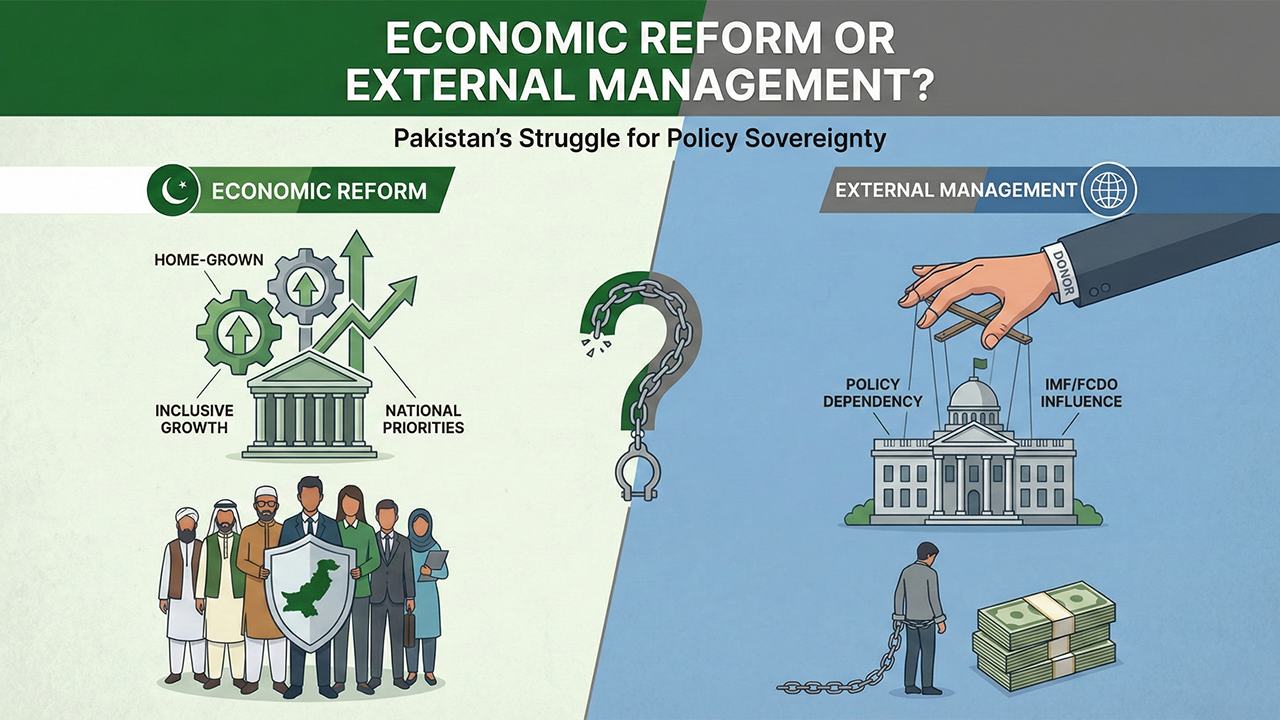
The logic is stark but undeniable. A country that relies on the IMF for survival cannot be truly sovereign. When you live on bailouts, your foreign policy, your development projects, and even your internal stability become bargaining chips on a creditor’s table.
The Army Chief’s reported emphasis on charting a path out of perpetual IMF programs is not just about economics; it is about strategic autonomy. Repeated bailouts weaken the state’s “immune system,” leaving it vulnerable to external pressures. You cannot project power abroad if you are begging for tranches at home.
The security establishment appears to be recognizing that the “stabilization” sold by international donors is a trap. It keeps the patient alive but in a coma. It prevents total collapse but forbids the kind of aggressive industrial investment required for true national power.
A weak economy compromises defense capabilities, limits diplomatic leverage, and fuels internal unrest, all of which are traditional security nightmares. Therefore, the push for a “home-grown” economic plan is being viewed not just as a financial necessity, but as a defense imperative.
This does not mean isolationism. It means engaging with the world on Pakistan’s terms. A genuinely home-grown program allows the state to set national priorities first, investing in strategic sectors, protecting food security, and building digital infrastructure: without waiting for a permission slip from a foreign capital.
The message is clear: The era of viewing the economy as a secondary, civilian concern is over. Economic independence is now the prerequisite for national survival. If Pakistan wants to secure its borders, it must first secure its books—not by borrowing more, but by producing more. The path to a secure Pakistan runs directly through a sovereign economy.